
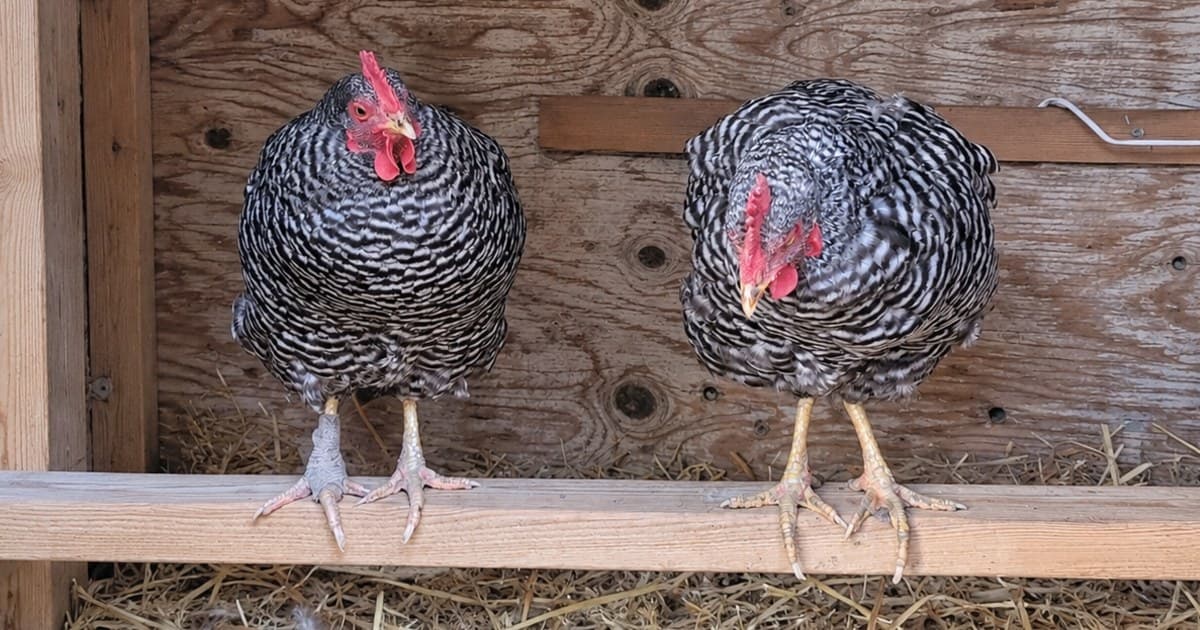
Every fall, someone at the feed store asks which heat lamp to buy for the coop. For most flocks the answer is none. A healthy, fully feathered chicken can handle temperatures well below freezing on her own. What she can't handle is a damp coop, a draft blowing across the roost, or a water dish frozen solid by mid-morning. Winterizing comes down to fixing those few things before the cold arrives.
This guide covers the steps that matter, in roughly the order we'd tackle them on a fall weekend.
Skip the Heater
Heat lamps hung over dry shavings and straw cause coop fires every winter. They also keep birds from acclimating. Chickens grow extra down as the weather cools, and a flock kept artificially warm never fully does. If the power goes out during a cold snap, those birds take a sudden temperature drop their bodies aren't ready for.
The exceptions are chicks still in the brooder, sick or injured birds, and places that sit well below zero for long stretches. If you do need heat, use a flat panel heater or a heated perch on a thermostat, and keep it well away from bedding.
Ventilate Up High
A flock breathes out a surprising amount of moisture overnight, and their droppings add more. If that moist air can't escape, it condenses on the walls and ceiling, soaks the bedding, and settles on combs. Frostbite is far more likely in a damp coop than a dry cold one.
- Put vents near the roofline. Openings under the eaves or along the top of the walls let warm, wet air rise and leave without blowing on the birds.
- Keep them open all winter. Closing vents to hold in warmth is one of the most common winter mistakes.
- Check for warning signs. Frost or water droplets on the inside of the roof, an ammonia smell when you open the door, or damp bedding all mean you need more ventilation.
- Cover vents with hardware cloth. Raccoons and weasels are hungry in winter, and an open vent is an open door without it.
Block Drafts at Roost Level
Ventilation moves air above the birds. A draft moves air across them. Stand where your hens roost and feel for moving air, especially around windows, doors, and gaps where the walls meet the floor. Seal those spots with caulk, scrap wood, or weatherstripping. Leave the high vents alone.
Set Up the Roost for Cold Feet
A 2x4 laid flat, with the 4-inch side up, lets a hen sit down over her feet and cover her toes with her body feathers. Round or narrow perches force her to grip, which leaves toes exposed. Keep roosts away from windows and below the vent line, and give the birds enough length to sit close together if they want to.
Build Up the Bedding
The deep litter method works well in winter. Start with several inches of pine shavings or straw and keep adding fresh material on top rather than cleaning out. The bottom layer breaks down slowly and gives off a little warmth while insulating feet from a cold floor. Turn it with a rake when you see clumps, and pull out any wet spots under the waterer right away. If it smells of ammonia, it's too wet, and the ventilation needs another look.
Keep Water Liquid
Chickens drink less when the water is ice cold and can't drink at all when it's frozen. Laying hens need water to make eggs, and a dehydrated bird has a much harder time staying warm.
- A heated base under a metal fount, or a heated poultry waterer, saves you from hauling buckets in the dark.
- Flexible rubber pans are a good backup. Ice pops right out when you flip them over.
- Keep waterers outside the coop or in the run when you can, so spills don't add moisture to the bedding.
Feed for the Cold
Birds burn more calories keeping warm, so expect them to eat more. Keep a complete layer feed available all day. A handful of scratch grains in the late afternoon gives them something to digest overnight, but scratch is low in protein, so keep it small. During molt or a long cold spell, a little extra protein from mealworms or black soldier fly larvae helps.
Watch the Combs
Breeds with big single combs, like Leghorns, are most at risk for frostbite. Early frostbite shows as pale or gray tips, and later turns black. Some keepers rub petroleum jelly on combs before a hard freeze, though opinions differ on how much it helps. Dry coop air does more. If you see frostbite, leave the damaged tissue alone and let it heal on its own.
Deal With the Mud
Here in the Pacific Northwest, rain is a bigger winter problem than snow. A run that turns to muck by November leads to dirty eggs, wet feet, and bumblefoot. A roof or tarp over part of the run gives the flock a dry place to scratch and dust bathe. Wood chips spread in the low spots help drain the ground, and a gutter on the coop keeps roof runoff from pooling at the door.
A Quick Pre-Winter Checklist
- Check vents are open, clear, and screened.
- Seal drafts at roost height.
- Flip or replace roosts so the wide side faces up.
- Lay down a deep base of fresh bedding.
- Test the heated waterer before the first freeze.
- Walk the run and coop for gaps a predator could use.
- Cover part of the run and add wood chips to wet areas.
Egg production will slow as the days get shorter no matter what you do. That's daylight, and a warmer coop won't change it. Most hens pick back up as the days lengthen in late winter.
Sources
- Fresh Eggs Daily - How to Winterize Your Chicken Coop
- Timber Creek Farm - Things Chickens Don't Need for Winter
- Backyard Poultry - Winterizing Chicken Coops
- The Farmer's Cupboard - Do Chickens Need Heat in the Winter?
- Kalmbach Feeds - How to Winterize a Chicken Coop
- Camryn Rabideau - Do You Need a Chicken Coop Heater?